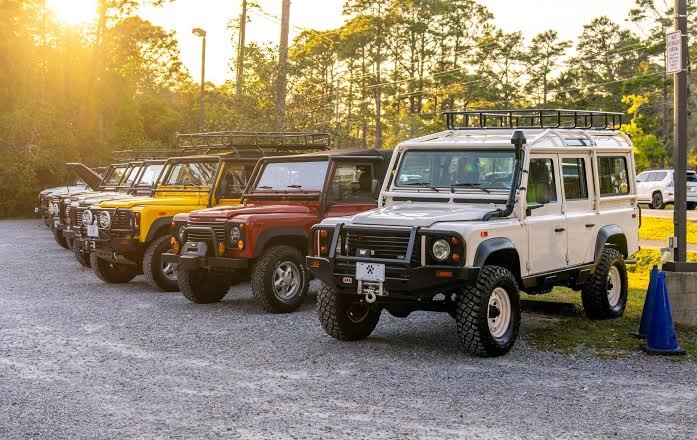
old land rover defender

old land rover defender

Restoring Classic Land Rovers: A Guide

It’s loud, slow, leaks when it rains, and has a heater that works more in theory than in practice. By every modern standard, it sounds like a car to avoid. Yet, for a global community of devoted owners, a classic Land Rover is a dream come true. So what is the secret? Why do people adore these rattling, rugged metal boxes?

You’ve almost certainly seen one, even if you didn’t know its name. Perhaps it was bouncing across the savanna in a nature documentary or parked stoically in front of a Scottish castle in a film. The boxy silhouette of an old Land Rover is an unmistakable icon, a universal symbol of go-anywhere adventure that has been woven into our cultural backdrop for over 70 years.

The answer to its strange appeal lies in a simple truth: you love the vehicle for its character flaws, not in spite of them. Common knowledge among owners suggests that these machines demand a relationship, not just a driver. Each rattle tells a story, every mechanical quirk asks for a bit of understanding, and the famously bumpy ride connects you directly to the road beneath. Driving this vintage 4×4 is less like using an appliance and more like cooperating with a charming, if stubborn, old friend.

Channeling that spirit is what this journey is all about. To truly bring a classic Land Rover back to life, you must first understand the soul of the machine. By peeling back the aluminum panels, you’ll discover why restoring a piece of history into a partner for future adventures is one of the most rewarding journeys an enthusiast can take.

Grandparents vs. Parents: What’s the Real Difference Between a ‘Series’ and a ‘Defender’?

To the untrained eye, any classic, boxy Land Rover can look much the same—a charmingly rugged metal box on wheels. In reality, telling them apart is as simple as understanding a family tree. The easiest way to grasp the history of the Land Rover Defender and its ancestors is to think of the older “Series” models as the tough grandparents, and the later “Defender” as their more capable, modern-thinking children.

The early generations, built from 1948 to 1985, are known as Series Land Rovers. These are the original workhorses, designed as agricultural tools that just happened to be road-legal. They are the essence of simplicity. You can often spot a Series model by its external door hinges bolted right onto the bodywork, a simple metal-mesh grille, and a flat, utilitarian dashboard that looks like it belongs on a tractor.

Stepping into the 1980s, the vehicle evolved into what would eventually be named the Defender. While it kept the iconic shape, it was a significant update. The clearest giveaway in the Land Rover Series vs Defender debate is the front end: the classic Defender has a modern, one-piece plastic grille and a single-piece windshield. It was a clear effort to make the vehicle a little more refined for a new era, without sacrificing its legendary toughness.

Ultimately, the Defender isn’t a completely different vehicle; it’s a direct descendant carrying the same adventurous DNA. The family resemblance is undeniable because the philosophy remained the same: to be unstoppable. But spotting the visual differences is one thing; getting behind the wheel to feel the history firsthand is another story entirely.

old land rover

What It’s Really Like to Get Behind the Wheel

Climbing into a classic Land Rover for the first time is a sensory experience that no modern car can replicate. Forget the hushed, isolated cabin you’re used to. Instead, you’re greeted by the honest clatter of the engine and the feeling of the road directly through your seat. The thin pillars and tall, flat glass give you a commanding, panoramic view of the world around you, making you feel less like a passenger and more like a pilot navigating the terrain.

Your first turn of the wheel is an immediate lesson in physics. With no power steering, low-speed maneuvers like parking require a surprising amount of muscle. You don’t just flick the wheel; you heave it. The brakes don’t bite sharply; they ask for a firm, deliberate press. Every input is a direct conversation between you and the machine, with none of the electronic middlemen found in today’s vehicles.

This constant feedback from the vehicle teaches you a crucial concept: mechanical sympathy. It’s less like driving a car and more like riding a familiar old horse. You learn to listen to the engine’s mood, feel the vibrations through the floor, and guide the gear lever gently into place rather than forcing it. You work with the vehicle, anticipating its needs and understanding its mechanical language.

It might sound like hard work, but the reward is a feeling of connection that has been engineered out of modern automobiles. Driving a vintage off-road vehicle like a Land Rover Series isn’t a numb, passive activity; it’s an engaging partnership. Reaching your destination feels like a genuine accomplishment you and your trusty metal companion achieved together. This hands-on partnership, where the line between driver and mechanic blurs, comes with its own set of rules—including the three big ‘quirks’ every aspiring owner must embrace.

The Three Big “Quirks” Every Aspiring Owner Must Embrace

Beyond the unique driving feel, owning a classic Land Rover means embracing a reality very different from modern car ownership. For enthusiasts, the most common problems aren’t deal-breakers; they’re rites of passage. This unique relationship comes down to three fundamental truths you learn to accept, and even appreciate: 1. The Fight Against Rust, 2. The Art of the Drip, and 3. The Weekend Ritual.

First and foremost is the constant battle with rust. These trucks were built with a steel frame and aluminum body panels—a combination that, unfortunately, can trap moisture and cause corrosion in critical areas. The two most notorious spots are the chassis (the heavy steel ladder frame that acts as the vehicle’s spine) and the bulkhead (the metal wall separating the engine from the passengers’ feet). While some surface rust is part of the territory, serious decay in these spots is one of the few things that truly threatens these otherwise indestructible machines.

Next, you have the famous leaks. There’s a well-worn saying in the community: “If a Land Rover isn’t marking its territory, it’s because it’s empty.” These vehicles were designed in an era when a small, steady drip from the engine or axles was considered normal. Instead of seeing it as a fault, seasoned owners learn to read the drips on their driveway as a simple way to check fluid levels. This answers the question “are classic Land Rovers reliable” in a unique way: they are predictably imperfect.

Finally, this hands-on reality leads to the weekend ritual. Owning one of these isn’t a passive experience; it involves regular tinkering, checking fluids, and tightening the occasional bolt. For many, this becomes a beloved hobby, not a chore. This constant need for attention might sound like a nightmare, but there’s a surprising silver lining. Because the mechanics are so wonderfully straightforward, many of these tasks are not only manageable but genuinely rewarding to fix yourself.

Why ‘Breaking Down’ Can Be a Good Thing: The Joy of Simple Mechanics

That weekend ritual of tinkering isn’t just a charming quirk; it’s the key to one of the most rewarding aspects of owning an old Land Rover. Imagine your modern car flashing a cryptic warning light. Your only option is a tow truck and an expensive trip to a garage with a specialized computer. Now, picture a classic Land Rover sputtering to a halt. More often than not, the solution lies in your glovebox—a simple wrench, a bit of patience, and the satisfaction of getting yourself moving again.

The secret to this roadside resilience is what the vehicle doesn’t have: a central computer. In nearly every car made in the last 30 years, an Engine Control Unit (ECU) acts as the car’s brain, managing everything from the fuel mixture to the spark plugs. It’s incredibly efficient, but when it fails, it’s a black box that’s impossible for most people to fix. A classic Land Rover, by contrast, is a purely mechanical machine. It operates on simple, physical principles you can see, hear, and touch, making it wonderfully transparent and diagnosable.

What makes this DIY spirit truly thrive is the incredible parts availability. Because these trucks were built for decades and served in every corner of the globe, a massive industry exists to support them. Unlike many classic cars where a single broken part can mean a year-long search, you can find almost any Land Rover component online, often with options to buy a cheap replacement, a high-quality original, or even a modern, upgraded version of the old part. This makes keeping one on the road both practical and surprisingly affordable.

This incredible accessibility transforms ownership from a passive experience into an empowering hobby. The answer to “are classic Land Rovers reliable?” becomes more personal; they are as reliable as you are willing to learn and engage with them. Fixing a problem yourself creates a bond and a sense of accomplishment that a modern car simply cannot offer. This hands-on nature, however, makes knowing what to look for before you buy so critical.

Your First Look: Two Spots to Check Before You Fall in Love

While a bit of surface rust on a door panel can be part of the charm, serious corrosion in two key places can quickly turn a dream project into a financial nightmare. Fortunately, you don’t need to be an expert to spot the biggest red flags. Forget the shiny paint and focus on the truck’s foundation, starting with its steel skeleton—the chassis.

Think of the chassis as the vehicle’s spine. The most vulnerable parts are a series of triangular steel brackets, called outriggers, that connect this spine to the body. Crouch down and look just behind the front wheels; you can’t miss them. Give one a firm tap with your knuckle. A solid thud is what you want to hear. If you get a crunchy, flaky sound, you’ve found serious rust that requires expensive surgery to fix.

The second critical area is the steel wall that separates the engine from you and your passengers, known as the bulkhead. This isn’t just a simple divider; it’s a core structural piece that holds the dashboard, supports the doors, and anchors the windshield. Water and time conspire against it, so carefully check the top corners where the roof meets the windshield and down in the footwells where moisture gathers. Bubbling paint here often signals deep-seated rust within.

A shiny coat of paint can hide a crumbling frame, and new seats can be installed in an afternoon. These two areas, however—the outriggers and the bulkhead—form the very soul of the vehicle. A problem here is a major warning, while a solid foundation means you’ve found a truck worth saving. This fundamental difference separates a good project from a bad one and frames what “restoration” really means for these timeless machines

old land rover

From Farm Tool to Family Adventurer: What “Restoration” Really Means

After peering under a truck and tapping on its frame, you might think owning an old Land Rover is all about fighting a battle against rust. In many ways it is, but it’s also about what comes next: giving the truck a new lease on life. The word “restoration” gets thrown around a lot, but for these vehicles, it’s not a one-size-fits-all process. It’s a choice between honoring the past and engineering a more comfortable future.

For any serious vintage Land Rover restoration project, the ultimate upgrade starts with that steel skeleton. Instead of just repairing the old chassis, many owners opt for a galvanized chassis. This involves dipping the entire frame in a vat of molten, rust-proofing zinc, protecting the steel from the inside out. It’s the gold standard for longevity, offering one of the key galvanized chassis benefits: a permanent solution to the rust problems of the past.

With a solid foundation, owners face a choice. The first path is a Sympathetic Restoration. This approach is like being a museum curator; the goal is to preserve the vehicle’s original character. You’ll fix the mechanicals and ensure it’s safe, but keep the original engine, the simple interior, and maybe even a few distinguished dents. It’s about celebrating the Land Rover for what it was—a rugged, honest machine.

The alternative is a Restomod, a blend of “restoration” and “modification.” This path is for someone who adores the classic look but wants a truck that’s easier to live with. Think of it as putting a modern kitchen into a beautiful historic home. You keep the iconic style, but under the skin, you might be upgrading a classic Land Rover for modern use with power steering for easier parking, a more reliable engine, or even air conditioning. It’s timeless style with modern convenience.

Whether a Land Rover is reborn as a time capsule or an updated adventurer, another one of these incredible machines is saved. But the journey isn’t a solo one. In fact, you’ve just gained entry into one of the most passionate and helpful communities on earth.

Joining the “Camel Trophy” Spirit: Why the Community Is the Real Prize

One of the first things new owners notice isn’t the bumpy ride or the noisy engine; it’s a simple gesture from a stranger. When another classic Land Rover approaches, the driver will almost certainly lift a finger or two from the steering wheel in a quiet salute. This is the “Land Rover Wave,” an instant acknowledgment that you’re both part of the same club—a club that understands the unique challenges and immense rewards of keeping these machines on the road. It’s a secret handshake on four wheels, a welcome to the classic land rover community that spans the entire globe.

This sense of shared adventure has deep roots, most famously demonstrated by the legendary Camel Trophy. Running from 1981 to 2000, this grueling event was less a race and more a test of human endurance, teamwork, and mechanical survival. Teams in iconic, sand-colored Land Rovers tackled impossible terrain, from the jungles of Borneo to the Amazon basin. The Camel Trophy vehicle history isn’t about speed; it’s a story of winching through mud, building bridges over rivers, and relying on your truck and your teammates to simply finish. It cemented the Land Rover’s image as the ultimate, dependable tool for exploring the unknown.

While the official event is long gone, its spirit is the glue that holds the community together. Online forums and local clubs are filled with owners eager to share a rare part, offer troubleshooting advice, or organize a weekend camping trip. The mentality is one of mutual support, born from the knowledge that these trucks were built to work together. This culture has helped maintain the Land Rover’s reputation as arguably the best vintage 4×4 for off roading, not just for its mechanical prowess, but for the human network that supports it.

Ultimately, the restoration projects and the off-road capability are only part of the story. The real prize of owning an old Land Rover is the camaraderie. It’s knowing that a breakdown on a remote road might lead to a new friendship, not a disaster. It’s the shared history, the knowing nods, and the sense of belonging to something bigger than just a car brand. This human element is what transforms a simple metal box into a key that unlocks a world of adventure and connection.

Is an Old Land Rover Your Kind of Adventure?

What was once just a ‘cool,’ boxy truck now tells a fuller story. Behind the iconic shape is a deliberate trade-off: rugged simplicity for modern comfort, and a rich history for constant care. A vintage Land Rover is not just a vehicle, but a philosophy on wheels.

The real question then becomes: is this world for you? Does the thought of a roadside fix, wrench in hand, fill you with dread or a quiet sense of adventure? Do you see a leaky roof as a fatal flaw or a funny story waiting to happen? Your answer reveals more about your personality than it does about the classic 4×4.

Owning one is less about transportation and more about connection—a relationship with an honest mechanical object in an increasingly digital world. For the right person, a toolkit isn’t a burden but an invitation to become part of the car’s ongoing story. It’s a map to a different kind of journey, one measured in experiences, not miles per hour.

So, the next time you see one rattling down the road, you’ll know. Choosing a classic Land Rover isn’t about getting from A to B; it’s about making the journey between them unforgettable. The final question isn’t whether the car is good enough for you, but whether you are the right kind of person for the car.

6 thoughts on “old land rover defender

  1. Roger Black says:

    Excellent write-up on off-road prep. For anyone prepping a Defender for rock crawling, our checklist and parts guide have proven helpful

    • Mary Klein says:

      Nice article! For those upgrading braking on older Defenders, we documented a cost-effective upgrade path with parts links and fitment notes

  2. Mike Smith says:

    I love the historical context you included. If readers want factory-spec parts and modern retrofit options for Defenders, we compiled a comparison

  3. Mary Klein says:

    Thanks for the maintenance tips — small things like correct torque specs save headaches. We keep a printable Defender service checklist that complements this post

  4. Daniel says:

    Great photos and route notes. If anyone’s planning the same trip, our Defender packing list and roof-rack mounting guide might help

Leave a Reply

Your email address will not be published. Required fields are marked *